Bennett and the Tirpitz

Leadership was a key quality in sustaining aircrew morale, and the commander of the Pathfinders, Don Bennett, was above all things an inspirational leader. He had immense courage and steadfastness of nerve. In his book Pathfinder, he tells the story of  being shot down whilst attacking the Tirpitz, giving the details very plainly without any hint of ‘line-shooting’  (‘line-shooting’ was the RAF wartime term for bragging, any suggestion of which was deeply detested by aircrew).

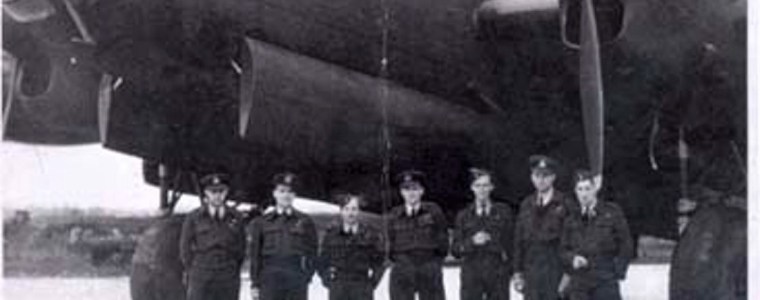
At that time, Bennett was the commander of 10 Squadron stationed at Leeming. The attack on the Tirpitz took place on 27/28 April 1942. The crew of Bennett’s Halifax were:

W/C D C T Bennett, Sgt H Walmsley (2nd Pilot), F/Sgt J Colgan (F/E), Sgt T H A Eyles (Nav), Sgt C R S Forbes (W/op), Sgt J D Murray RCAF and F/Lt H G How (gunners)

As Bennett’s aircraft approached the ship, it was hit many times and the tail gunner wounded. In a masterpiece of understatement, Bennett summed this up as ‘things were far from peaceful’.

The Tirpitz was hidden by a defensive smoke screen, and was almost impossible to locate exactly. Bennett’s calibre is shown by the fact that even though his aircraft was on fire and badly damaged, he still went round to try a second run. He released the mines as best as possible, then turned east towards neutral Sweden. Things were so bad that he then gave the order ‘Prepare to abandon aircraft’.

I regret to say that one member of the crew became a little melodramatic. He said, ‘Cheerio, chaps; this is it, we’ve had it.’ I told him very peremptorily to shut up and not to be a fool, that we were perfectly all right but that we would have to parachute.

Because the tail gunner, Flight Lieutenant How, was badly wounded, Bennett kept the aircraft in the air as long as possible so that How could escape with the aid of the flight engineer, Flight Sergeant Colgan. Bennett finally jumped just as the aircraft began to break up.

After baling out, he chanced across his w/op Sergeant Forbes in the darkness. At first both of them thought that the other was a German.

Suddenly I realised that he was one of my own crew, and I said, ‘It’s all right. It’s your Wing-co, it’s your Wing-co.’

The story of the two men’s trek through deep snow  is deeply engrossing. After many hardships, and the assistance of the Norwegian people, they made it through to neutral Sweden.

All the crew of seven survived. Four, including Bennett, made it back to England, the rest were captured. Bennett arrived back in England exactly one month after he had been shot down. He immediately hitched a ride in an Anson down to Leeming where his wife and children lived.

The Intelligence boys were furious that I had not reported immediately to London to be interrogated. I could not have cared less.

Only two months later, he was given command of the Pathfinders.

Pathfinder Pets & Tich Palmer

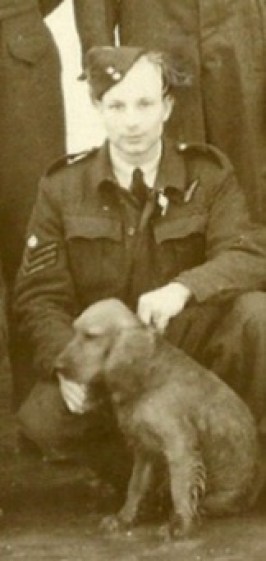
Further to our posts way back in March about Pathfinder pets, we have been given permission to use a much better image of Clayton’s crew with Clayton’s spaniel.

clayton crew with Titch Palmer

The man holding the dog is Tich Palmer, who later went on to fly with the Mansbridge crew on 635 Squadron and sadly was lost with the entire crew on 20 April 1944.

clayton crew, Tich with spaniel

By kind permission of Medals of England, which sold the Titch Palmer collection a while ago: Titch Palmer Medals and Logbooks


Bomber Harris – Interview 1943

In 1943, E Colston Shepherd, the editor of The Aeroplane, interviewed Harris both at his office and at home, the latter being Springfields at Great Kingshill, close to High Wycombe’s Bomber Command HQ. In the subsequent article in the Picture Post, Colston Shepherd described Harris as:

broad-shouldered, bull-necked, of medium height, unsmiling and of a ruddy complexion, […] the sort of officer with whom no one takes liberties.

A caption to the photograph, above, of Harris with his wife and his daughter Jacqueline, aged 3 and a half, is captioned:

Air Chief Marshal Harris at Home: The Only Time When He Is Smiling

In 2017 Springfields was on the market for the first time since sold by the Ministry of Defence in 2002. Again, you can read this on the Daily Mail online, as long as you can ignore all the peripheral distractions. Bomber Harris Home for Sale

Bomber Harris – More on Yesterday’s Post

A couple of minor clarifications about yesterday’s post. ‘Bomber Harris is seldom equated with a sense of humour’ – we meant, of course, in the general public’s view, including that of people abroad.

The standard identikit image of Harris is of a mono-focused, stern and vengeful killer of civilians; this is not just a modern view, and Harris was well aware that many held this opinion of him during the war. The story about the sentry on the roof, as given yesterday, concluded with Harris saying that that was the one and only time, on one of the worst nights of the Blitz, that he felt vengeful against the Germans. We should have made it clearer that this comment was a direct riposte to wartime criticisms: ‘I have often been accused of being vengeful during our subsequent destruction of German cities’.

Not to go off on too much of a tangent about this, but the Blitz, not only in London but all over the country, was the catalyst for many young men and women in their decision to join the RAF. This may have been partly an impulse of revenge, but it was also the keen desire to take the war back to the Germans, a direct land assault on western Europe being out of the question until a late stage of the war.

Max Hastings’ 2010 account of the Daily Mail photographer who took the iconic picture of St Paul’s in an ocean of fire can be read (if you can stand all the adverts and general distracting junk) on the Daily Mail online: Max Hastings on Herbert Mason


Pathfinder pets – Clayton and his spaniel

Further to our post yesterday, I remembered that somewhere in the Archive there was another 97 Squadron dog. And here he is, a spaniel who belonged to the pilot Peter Clayton, DSO, DFC. Unfortunately the copy of the photo we have is very low resolution, but you can just make out the dog sitting between Clayton’s legs.

The crew were flying with 97 Squadron in 1943, and on 27/28 September, for example, the crew members were:

JB238A  F/L R.F.Clayton, Sgt L.Palmer, F/L F.W.Chandler, F/Sgt A.E.Newbegin, W/O W.Halsey, F/Sgt J.Woods, W/O P.O.Bone.

Des Evans, who used to run the 97 Squadron Association website, emailed me way back in March 2006 about Peter Clayton’s dog. (I am not sure, by the way, why Clayton’s initials in the ORB are ‘RF’ and not ‘P’ – a small mystery there.)

Talking of Dogs yesterday. I had a great email from Kevin [Bending] last Night. He has been in touch with Peter Clayton , knocking up the years a bit now. However he is going to let us have a log book for his Spaniel which flew on a few trips with him and his crew. They evolved a logbook for him.

I wrote what a good story it was and asked if all the crew survived. Des responded: ‘To my knowledge they all survived including the Dog. Peter Clayton is still alive and well.’

Unfortunately I don’t know whether the spaniel’s logbook was ever copied.

The photograph above was sent to Des by Darren Rigsby, whose Grandfather was Pilot Officer Peter Bone, DFC (extreme left in the photograph). P/O Bone was the mid-upper gunner in the crew.

JENNIE


RAF Pathfinders Archive, “Tales”, No. 5

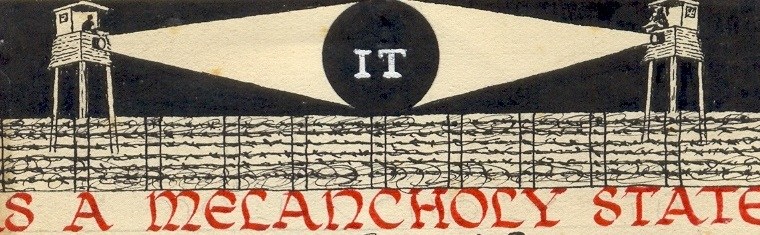
Tales from the Archive this month is on Wally Layne’s wartime log. Wally was a member of a 97 Squadron crew which was shot down over Germany in September 1943, and he spent the rest of the war as a prisoner. His logbook is one of the best surviving examples of the many thousands of logbooks which were made by British prisoners of war.

Tales from the Archive 5. 22 February 2018

Wally Layne has his own website, created by his son David, with an immense wealth of documentation and images, see: WALLY’S WAR


Training in Canada

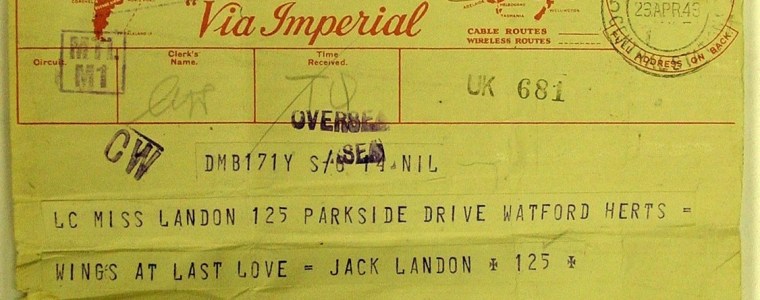
We are planning to do a small online exhibition on aircrew training overseas, but here is one sneak preview item, a rare survival of what must have been many hundreds of such telegrams, sent home by proud young men who had just qualified in their chosen trade.

This is the first such telegram we have ever seen. It was sent by John Conybeare Landon (who would serve with Main Force) to his younger sister, June.

With many thanks to his nephew, David Wingate.

Mansbridge Crew – Gerry Cruwys

Unfortunately, in the transfer from the old website, the biography of Gerry Cruwys written by his niece, Debbie Kennett, was mislaid. It is now back on the Mansbridge crew page.

Cruwys - Gerry in pilot uniform colour web (2)
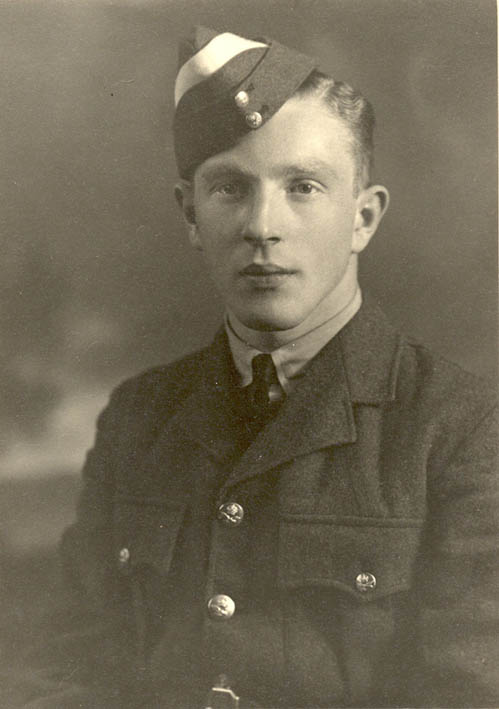
Gerald Cruwys. The white band on his cap shows that he was designated for aircrew training. Courtesy of Debbie Kennett.

See also this post on a video about the Ottignies operation in which this crew was lost.


Mansbridge Crew

Alain Libert, who for some years has been researching the Ottignies operation, 20 April 1944, and the loss of the Mansbridge crew, has produced a two-part video on the subject. Although it is in French, it can be easier to follow for English-speakers if you turn on the auto subtitles in YouTube. With thanks to Debbie Kennett, niece of Gerald Cruwys, the navigator of the Mansbridge crew.

Ottignies Operation, 1

Ottignies Operation, 2