Bobby Bear – Ready for Another 75 Years

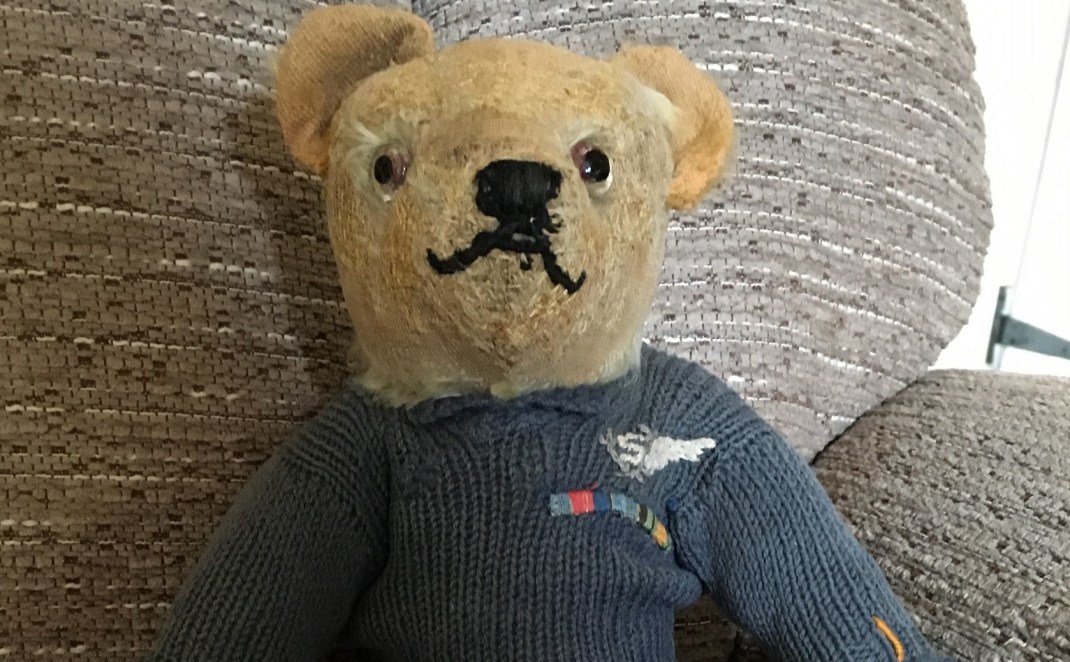
In May we published a post about Bobby Bear, the childhood toy of Joe Mack who survived a horrendous crash on Black Thursday, 16/17 December 1943. This post has since been updated with more information about wound stripes: Wound Stripes and the Thackway Crash

The purpose of this new post is to tell everyone that the restored Bobby Bear is on this coming Tuesday’s episode of The Repair Shop on BBC1 which hopefully will tell something of the background to Bobby Bear, his wound stripe, and the RAF’s worst night of the war for bad-weather crashes.
BB repaired 2

Part of the blurb for the programme reads:

And teddy bear repair duo Amanda and Julie welcome a 100-year-old RAF mascot bear called Bobby. Dressed in a replica uniform, the bear belonged to a brave airman who survived a horrific plane crash during the Second World War.

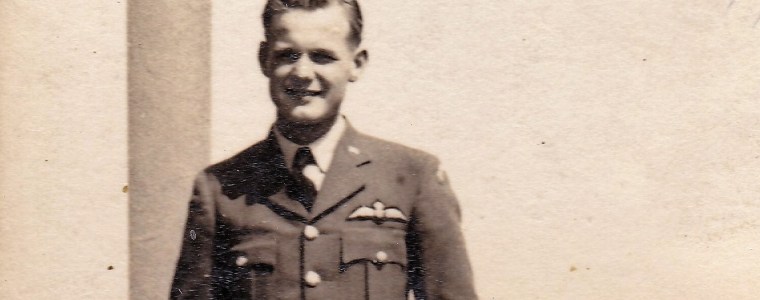
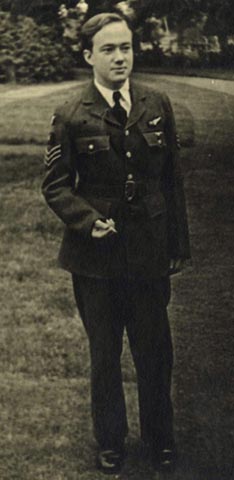
Below is a picture of Joe Mack on home leave in the summer of 1944 after months in hospital and rehabilitation. It can be seen that the uniform he was wearing hung very loosely on him as he had lost so much weight during the months in treatment. His medical care was exceptionally good and they saved his leg which had been very badly mangled. See also: Why the Archive Began
joe mack


Deverill Collection: Fund-Raising

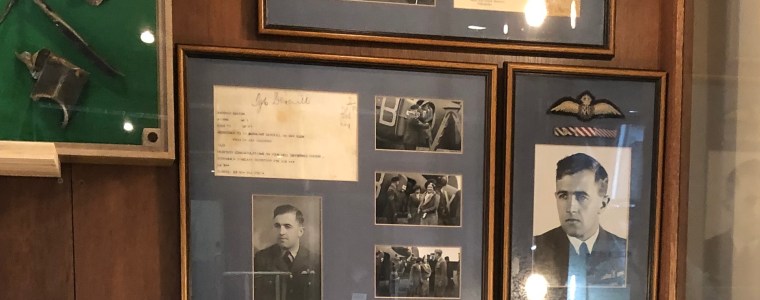
Two years ago, the RAF Pathfinders Archive bought the Deverill Collection to ensure that it would not go into private hands and possibly end up being sold off in separate parts. Since the Archive acquired the Deverill Collection, it has been on loan to the Heritage Centre at RAF Wyton, where it can be seen by the public, by appointment.

The Deverill Collection’s future as part of RAF history, and in particular the history of the Pathfinders and Black Thursday, 16/17 December 1943, is now assured. However, the Archive still has to raise £4,280 – 10% of the purchase price – to settle the remaining balance of the interest-free loans taken out to finance the purchase. Clearing the balance will enable us to look to the future when we may be able to acquire other suitable Pathfinder items. These too will be loaned for display at RAF Wyton, and will enhance the wonderful collection already there.

We are launching an appeal to all our supporters to help us clear the outstanding balance of the Deverill Collection purchase. Please contribute what you can to help us settle the last debts for this outstanding pilot and ‘Knight of the Air’.

DONATE TO THE ARCHIVE

We are giving away a free pair of Black Thursday booklets to anyone who contributes £30 or more.

The Black Thursday booklets

Deverill RH smaller

Above: the new Black Thursday display at RAF Wyton. See this page: The Deverill Collection at RAF Wyton

The Air War

Although this whole site is intrinsically about the Air War, as part of the reorganisation of the website we have collected a number of topics on one page for easy reference. These include such subjects as Animals in the Air War, Lancaster Art, Superstitions, and Pilot Officer Prune. The Air War

Two Canadians & a Mosquito of 109 Squadron

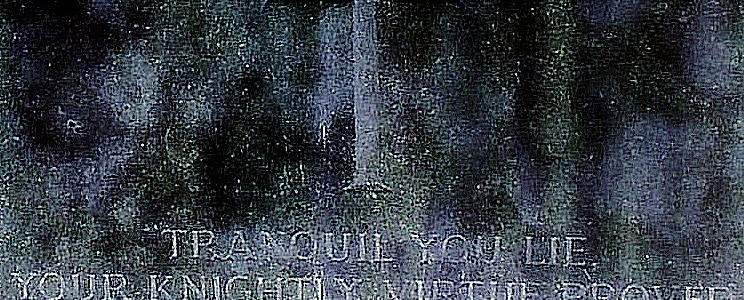
The beautiful image on this post is of the grave of Ray Hutchings Logan, a Mosquito navigator, who lost his life on 28 May 1943 when the Mosquito he was flying in was hit by a German nightfighter and exploded in mid-air. The pilot, Chrysler, survived by coming down by parachute. See our new page: Two Canadians & a Mosquito of 109 Squadron


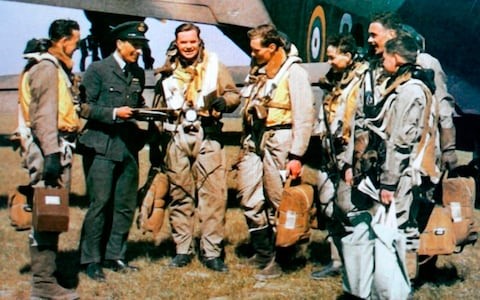
35 Squadron Crew at Wedding

It seldom happens that a photograph with unknown aircrew in it gets even partially identified, but amazingly this has happened with the photograph we featured almost exactly one year ago of an unknown Pathfinder crew at a wedding.

The man second from the right has been identified by his children as John Graham Walters, a bomb aimer, who was with 35 Squadron at Graveley. See the revised page on the photograph.

For the colourised photograph of the wedding photograph, our thanks are due to Paul Smith who sent the black and white version originally.

Barr Crew, 7 Squadron

In January this year we featured a magazine cover with a lovely picture of a bulldog posing as ‘Pilot Officer Prune’ and his unknown human friend, a pilot.  We later discovered that the pilot was Flight Lieutenant Leslie Barr.

A very interesting article appeared in The Telegraph two days ago about Barr’s crew, who were shot down on 10 September 1942 near Echt in Holland, west of Dusseldorf, the target of that night’s operation. Only two men out of the crew of eight survived. Barr and another crew member are buried at Jonkerbos War Cemetery, but the bodies of the four remaining crew members had sunk deep into the marshy ground, and they are remembered at Runnymede. The article in The Telegraph concerns these last four crew members and one Dutch family’s long crusade to have the bodies recovered from the mud and honourably buried.

Jack Blair, Ward and Sauvage Crews

Jack Blair was a highly dedicated officer who flew more than his fair share of ops. In 1943, he was a member of John Sauvage‘s crew on 97 Squadron; in 1944, having moved to 156 Squadron, he was flying with a pilot named Ward when the crew were shot down on their return journey. Thanks to Arjan Wemmers and many others, a wonderful collection of material has been assembled on the Ward crew, and in particular on Jack Blair. (See catalogue item: Ward Crew and Squadron Leader Blair.) We are very pleased to have this collection in the Archive.

O Valiant Hearts

Ernest Deverill, the much-decorated 97 Squadron pilot killed on Black Thursday, whose medals, logbooks and other memorabilia are on display at RAF Wyton, is buried at St Mary’s, Docking, Norfolk. The epitaph on his gravestone comes from the same hymn as the one for Arthur North, of the 105 Squadron crew buried at Bergen, Norway, who were mentioned on yesterday’s post. For details of the epitaphs on these gravestones and of the hymn from which they were taken, see O Valiant Hearts.

Films on the Air War

News about three films on the Air War, the first with direct Pathfinder connections, the other two concerning other interesting aspects of the Allied bombing campaign.

Firstly, the docudrama Hero which has recently been released. Filmed on a shoestring budget, it has no major distributor, so is being screened in only a handful of cinemas. It is about Ulric Cross, the most decorated black serviceman of the Second World War. Hailing from Trinidad, Cross volunteered for the RAF in 1941. He eventually joined 139 Jamaica Squadron of Pathfinder fame. Nicknamed “The Black Hornet” by his comrades, Cross was a navigator, flying in Mosquitoes. For more on Cross and the film, see this recent Telegraph article.

Also on a newspaper link is this amazing story of the conservation and repair of wartime footage of the American Air Force flying from bomber stations in England. Watch how the film editors did this, including ‘Before’ and ‘After’ shots, and you will be astonished at what they achieved. See this article in The Sun.

Lastly, Lancaster Skies, the link being for the trailer.

Apparently this film was also made on a shoestring, for only £80,000, and as they have done extremely well with such a limited budget and the film certainly has some excellent moments, it seems a bit churlish to criticise it too heavily. Nonetheless, some of the implausibilities are rather hard to take. For example, the incorrect claim that the height of the bomber war was in spring 1944, the landscape in the airfield scenes being clearly mid-summer, and lastly the massed Lancasters of the finale taxiing and taking off from a grass field.* However, if you can suspend disbelief in certain places, this film is well worth watching, and indeed at times it is very gripping and moving. Its heart is certainly in the right place. (Illustration is a still from the film.)


* Lancasters could take off from grassland if there were very dry conditions, but all the major bomber airfields would have had concrete runways by this stage of the war.